top of page

Smile Design Cases

Changing the lip support and the face height with Full Mouth Rehabilitation with Dental Porcelain Crowns - A Dental Face Lift Case

veneers cost toronto - how much do veneers cost in canada - porcelain veneers cost canada.

Case 77

A Smile Makeover Journey With a Leading Cosmetic Dentist in Toronto

Before-treatment portrait smile taken during the initial consultation at our dentist Yorkville Toronto practice (near Bloor-Yonge). The photo documents the patient’s gummy smile, uneven gingival line, and high tooth display—features that were further influenced by a deep, collapsed bite and reduced lip support. This baseline record is a key part of our digital smile design Toronto workflow, allowing our team to evaluate facial dynamics, tooth-to-gum proportions, and smile symmetry before planning crown lengthening, bite correction, and a comprehensive smile makeover Toronto. For patients searching for a cosmetic dentist Yorkville or a downtown Toronto dentist, these standardized images help create a predictable, individualized treatment plan.

Portrait Smile Before Treatment

She didn’t come to us looking for “a whole new smile.” She came looking for an answer that should finally stay.

This young female patient had already undergone multiple rounds of dental care at practices across Toronto, including extensive restorative work and a prior full-mouth rehabilitation. Each action was done with good intentions, but the outcome never fully matched what she saw in the mirror every day. Her biggest frustration wasn’t simply that her smile looked “gummy”; it was that the gumline looked uneven and unpredictable, and it kept changing after treatment.

This 2D Smile Design stage is part of our digital smile design Toronto process at Toronto Smile Design – Yorkville Dental. Using standardized facial and smile photographs, we create a 2D overlay to evaluate midline, smile arc, tooth proportions, incisal edge position, and gingival symmetry—especially important for gummy smile and uneven gumline cases. For patients seeking a cosmetic dentist Yorkville or a dentist near Bloor Yonge, this planning step helps us visualize how moving teeth and refining the gumline can improve facial balance before any irreversible treatment begins. In complex cases involving deep bite and bite collapse patterns, 2D smile design also supports our occlusion planning by aligning aesthetics with function. It’s a clear, patient-friendly way to preview the blueprint of a smile makeover Toronto.

Two-dimensional digital smile design planning with reference lines on teeth, used by cosmetic dentist Toronto to plan smile makeover and porcelain veneers.

Over the years, she underwent multiple crown lengthening procedures at other offices to reduce gingival display and improve symmetry. Unfortunately, the result repeatedly relapsed: the gum tissue crept back, the gumline levels shifted, and the harmony of her smile drifted off again. With each attempt, she felt more hesitant—worried she was stuck in a cycle of short-term fixes.

At the same time, we could see that the gums were only part of the story. She also presented with a deep, collapsed bite pattern that affected how her teeth met, how much tooth was visible when she smiled, and even the way her lips were supported at rest. In simple terms, when the bite is 'collapsed,' the lower face can look compressed, and the lips may struggle to sit comfortably, especially for a patient already self-conscious about how much gum and tooth show when smiling. A deep, collapsed bite means that the teeth don't align properly when the jaws close, often causing excessive overlap of the front teeth. This can lead to discomfort and a feeling of the jaw being scrunched, as if there's not enough space for everything to fit comfortably. The patient described this feeling as 'my jaw always felt scrunched,' which vividly illustrates the impact on her daily comfort and appearance.

This smile photograph highlights the two aesthetic drivers of the case: an uneven gingival line (gummy smile asymmetry) and incisal edge discrepancies that created excessive tooth display and amplified the deep-bite appearance. At our dental clinic Yorkville, we use these annotated smile images as part of our digital smile design Toronto process to map proportions, symmetry, and facial harmony before initiating treatment. For patients searching for a cosmetic dentist Yorkville or a dentist near Bloor Yonge, this step makes planning transparent—showing exactly why the gumline and tooth length must be evaluated together. In this patient, the left-right imbalance in gum display and the long-looking incisal edges were not only cosmetic concerns; they were connected to bite dynamics and required a staged, stability-focused approach.

Smile photo highlighting uneven gingival line and incisal edge discrepancies

This smile photograph highlights the two aesthetic drivers of the case: an uneven gingival line (gummy smile asymmetry) and incisal edge discrepancies that created excessive tooth display and amplified the deep-bite appearance. At our dental clinic Yorkville, we use these annotated smile images as part of our digital smile design Toronto process to map proportions, symmetry, and facial harmony before initiating treatment. For patients searching for a cosmetic dentist Yorkville or a dentist near Bloor Yonge, this step makes planning transparent—showing exactly why the gumline and tooth length must be evaluated together. In this patient, the left-right imbalance in gum display and the long-looking incisal edges were not only cosmetic concerns; they were connected to bite dynamics and required a staged, stability-focused approach.

Smile photo highlighting uneven gingival line and incisal edge discrepancies

When she visited our dental clinic in Yorkville, her goal was obvious: a smile that looked balanced, felt comfortable, and was designed with stability in mind, not only aesthetics. As a cosmetic dentist in Yorkville, our first priority was to slow down, listen carefully, and rebuild the plan from the foundation up, so any future gum or smile changes would be less likely to surprise her.

At Toronto Smile Design, we don’t begin a complex cosmetic case by "touching teeth." We begin by building a digital patient, which is a complete, realistic avatar of the smile, gums, bite, and facial dynamics. This approach allows us to visualize outcomes clearly and make decisions with certainty before irreversible commitments are made. For a patient who has already experienced relapse after prior crown lengthening, this step isn’t a luxury; it’s risk management. The digital patient model helps reduce surprises and makes the process less intimidating for those new to this technology by providing a clear picture of both functional and aesthetic outcomes before procedures begin.

These side-profile portrait photos document uneven gum display and smile asymmetry—details that can be missed in a straight-on view. At our dentist Yorkville Toronto practice, side portraits are a core part of our digital smile design Toronto records because they reveal how the upper lip moves, how much gingiva shows on each side, and how tooth display changes with facial dynamics. For patients seeking cosmetic dentistry Toronto or a cosmetic dentist Yorkville, these images help us plan gummy smile correction with greater precision, especially when gumline issues are connected to bite collapse or deep bite patterns. By analyzing the side views, we can design a plan that balances gum and tooth display while supporting a natural, relaxed smile.

Side Portrait Gum Display Analysis

This portrait photograph documents reduced lip support and decreased lower facial height associated with a deep, collapsed bite pattern. At our dentist Yorkville Toronto practice, facial records like this are essential in digital smile design Toronto because cosmetic dentistry isn’t only about teeth—it’s also about facial balance and how the lips are supported at rest and in smile. For patients exploring full mouth reconstruction Toronto or worn teeth treatment Toronto, these images help us evaluate how bite collapse can compress the lower third of the face and change tooth display. This baseline photo becomes part of the planning conversation when we discuss rebuilding occlusal planes and increasing VDO to improve function, comfort, and natural-looking facial support—always individualized to the patient.

Facial Support & Lower Face Height Assessment

This intraoral photograph captures the patient’s deep bite relationship, where the upper front teeth overlap excessively over the lower teeth, concentrating force in the anterior zone and contributing to a collapsed occlusal pattern. At our dentist Yorkville Toronto practice, intraoral records like this are a core part of diagnosis for patients seeking full mouth reconstruction Toronto or worn teeth treatment Toronto. Deep bite patterns can accelerate wear, create uneven contacts, and complicate cosmetic concerns such as tooth display and gumline symmetry. By documenting the bite directly, we can combine functional planning with aesthetics through digital smile design Toronto, building a treatment plan that aims for stable occlusion, improved comfort, and predictable cosmetic outcomes—always individualized to the patient.

Deep Bite

Her intake started with a high-detail records appointment: professional photographs (smile and rest), a 3D scan of the teeth and bite, and a careful evaluation of how her lips move and how much tooth and gum show in natural expression. We also look at function—how the teeth meet, where the bite “locks,” and how the jaw guides during movement—because aesthetic dentistry that ignores function often becomes short-lived dentistry. This is especially important in cosmetic dentistry in Toronto, where many patients have already had “piecemeal” work done in different clinics with different philosophies.

Once those records are gathered, we design outside the mouth. Using digital smile design Toronto, we can test proportions, gum symmetry, and incisal edge position in a way that is simply not possible when the first step is a bur or a scalpel. In her case, the asymmetry wasn’t only along the gingival line—her incisal edges also needed a reset. I felt her incisal edges appeared visually long relative to her facial dynamics, making the deep bite look even more pronounced and creating an “over-displayed” smile. And the asymmetry had a pattern: on her left side, she showed less gum than on the right, which changed how the entire smile arc read in photos.

This resting-lip portrait photograph documents how the lips and lower third of the face are supported when the patient is not smiling. At our dentist Yorkville Toronto practice, rest-position images are essential in digital smile design Toronto because they reveal tooth display at rest, lip support, and facial proportions—often affected by deep bite and bite collapse patterns. For patients researching worn teeth treatment Toronto or full mouth reconstruction Toronto, these baseline records help explain why cosmetic concerns (like excessive tooth display in smile or an uneven gumline) can be connected to function and vertical dimension. By capturing the resting position, we can plan a smile makeover that is designed for facial harmony and comfort—not just a “photo-only” result.

Resting Lip Position Record

MODJAW Centric Relation Recording

MODJAW Jaw Tracking: Opening/Closing Deviation

These static bite registration images document heavy bite contacts in both the anterior and posterior regions, indicating an overloaded occlusal pattern rather than balanced, evenly distributed contact. At our dentist Yorkville Toronto practice, bite registration records help us identify where force is concentrating—information that is essential for bite collapse treatment and complex restorative dentistry Toronto planning. In deep bite cases, heavy anterior overlap can accelerate wear and chipping, while excessive posterior contacts can contribute to instability and muscle compensation. When combined with digital smile design Toronto and MODJAW functional data, these static records support a predictable plan to rebuild occlusal planes and refine the bite before final restorations are fabricated—helping patients seeking full mouth reconstruction Toronto understand the “why” behind a staged approach.

Bite Registration: Heavy Anterior + Posterior Contacts
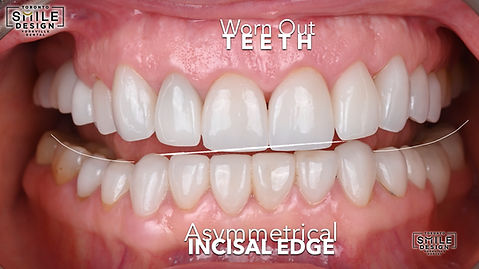
These intraoral photographs capture misaligned older restorations that no longer match the patient’s facial dynamics or functional bite position. In cases like this, restorative work can look “fine” in isolation but still create uneven contacts, an irregular occlusal plane, and instability during chewing—especially when deep bite or bite collapse patterns are present. At Toronto Smile Design – dental clinic Yorkville, we document these issues carefully as part of complex restorative dentistry Toronto and digital smile design Toronto planning. For patients searching for a cosmetic dentist Yorkville, a downtown Toronto dentist, or a dentist near Bloor Yonge, these clinical images help explain why a planning-first approach matters: we assess how existing restorations influence occlusion, tooth display, and gumline symmetry before building a stable full mouth reconstruction Toronto plan and designing the final restorations.

Misaligned Old Restorations

The advantage of designing on a digital avatar is that we can explore options conservatively: "What if we level the gingival line this way?" "What if we shorten or reposition the incisal edges slightly to soften the deep bite effect?" "What happens to the tooth display when the lips are at rest?"


By the time we discuss treatment, we’re no longer guessing; we’re reviewing a plan that has been stress-tested visually and functionally, with the patient fully involved. Imagine being part of this process and choosing the right path for your smile—"Which option would you pick if it were your smile?" For many patients seeking a downtown Toronto dentist, this kind of high-clarity planning is what finally turns anxiety into confidence.

A deep bite can look “tidy” in a still photo, but clinically it often behaves like a destructive pattern—especially when it’s paired with a collapsed vertical dimension and uneven contacts. The problem isn’t just how far the teeth overlap. It’s how the jaw closes into that overlap, where the first contacts occur, and what the muscles and joints must do to find a comfortable stopping point.

In her case, the bite didn’t close straight into place. We observed a deviation to the right during closure, meaning her mandible tracked off-center as she brought her teeth together. This is a classic sign that the bite and the jaw are “negotiating” a path into maximum contact, often because the contacts are not uniform, or because previous restorations and tooth wear have changed the way the teeth guide the jaw.

The lower teeth were asymmetrical at the bite level, displaying a canted lower occlusal plane. Imagine a wobbly three-legged table: when the lower bite plane is tilted, forces do not distribute evenly. One side tends to experience pressure earlier and more intensely, while the other side scrambles to align. Over time, this imbalance can lead to faster wear on one side, a higher risk of chipping or cracking on restorations, and ongoing muscle hyperactivity as the system tries tirelessly to stabilize itself.

This center intraoral photograph records the patient’s deep bite relationship, where excessive anterior overlap concentrates force and visually intensifies tooth display. At Toronto Smile Design – Yorkville Dental, we use this view to document how the upper and lower teeth meet in a collapsed bite pattern before making any restorative or cosmetic changes. For patients searching a downtown Toronto dentist or dentist Yorkville Toronto, this image helps explain why deep bite patterns can contribute to wear, instability, and aesthetic imbalances that may not resolve with “cosmetic-only” dentistry. This baseline is also used in digital smile design Toronto planning to coordinate incisal edge positioning with function, ensuring the final smile is built on stable occlusion rather than temporary bite contacts.

Deep Bite Center View

This left intraoral photograph captures the deep bite relationship from the left side, helping us compare bite contact patterns across both arches. These left-right comparisons are valuable in cases where the occlusal plane is not level or the bite closes unevenly, because even small differences can influence comfort, long-term stability, and aesthetic symmetry. For patients in Toronto researching full mouth rehabilitation Toronto or worn teeth treatment Toronto, this record makes the diagnosis visible: deep bite isn’t just “a look,” it’s a functional pattern that can overload both anterior and posterior teeth. This photo becomes part of our digital smile design Toronto workflow, ensuring the final restorations support a stable, balanced bite—especially in complex restorative dentistry cases.

Deep Bite Left View

This right intraoral view documents deep bite contacts and how force may concentrate on one side of the mouth. Side views are essential because deep bite problems are rarely “perfectly symmetrical” in real patients—uneven contacts can drive faster wear, restoration breakdown, and bite compensation patterns over time. At our dental clinic Yorkville, this record supports occlusion/bite correction dentist Toronto evaluation and helps explain why a staged approach (digital planning, testing, then finals) can be more predictable than treating teeth immediately. In a smile makeover Toronto case, the right view also supports smile design dentist Toronto decisions by showing how posterior contacts and anterior overlap influence tooth display, gum display, and the appearance of the smile arc.

Deep Bite Right View

Traditional bite paper marks provide a snapshot of contact points that occur at a specific moment. However, these marks often overlook the complete dynamics of jaw movement, leading to assumptions about how the bite truly functions. To detect these patterns accurately beyond what the naked eye can see, we used MODJAW to record her jaw movements dynamically. MODJAW is an advanced digital tool that captures the intricacies of jaw motion in real-time. It helps us visualize motion: how the jaw closes, where it shifts, and how the contacts evolve along the closing path. This technology matters because it allows for more precise planning, reducing the chances of error. For patients, the benefit is simple but powerful: we can design with fewer assumptions. If we’re planning gumline corrections, incisal edge adjustments, or future restorative changes, we want them to be compatible with the patient’s real functional movements, not an idealized bite on a model.

In a complex restorative dentistry case in Toronto, this kind of motion-based analysis can be the difference between a plan that looks great on day one and one that remains stable as the patient functions day after day. As a dentist in Yorkville, Toronto, our job is to create aesthetics that respect function—so the smile isn’t just beautiful, but also biomechanically sensible.

One more detail mattered, and to her, it mattered a lot. Her right upper lateral incisor was noticeably darker than the surrounding teeth. In everyday conversation, it can be easy to miss, but in the exact moment she cared about most, when she smiled, this specific discoloration can immediately draw the eye, especially under natural light or in photos. Because her tooth display was already high, that single darker tooth became even more visible and, understandably, a source of self-consciousness.

So from the very beginning, we treated shade and colour integration as part of the core plan—not an afterthought. Any gumline correction, incisal edge refinement, or bite stabilization would still fall short cosmetically if one tooth continued to read as “different” in the smile. Our goal was to make sure that when she smiled, the viewer’s attention would land on symmetry and harmony, not on a single tooth that looked out of place.

3D Digital Smile Design Toronto

With her history, we knew this couldn’t be approached as “gum work plus new teeth.” We started with the digital design phase to develop a plan that balanced aesthetics and function. The guiding principle was simple: if we could reposition the upper teeth slightly “up” in the smile—while rebuilding the occlusal planes of both arches—we could create a cleaner gum-to-tooth balance, a more stable bite, and a more natural-looking tooth display.

Digitally, we evaluated two things simultaneously: where the teeth should sit in the face (smile line, lip dynamics, midline, symmetry) and how the teeth should meet (occlusal plane, closing path, guidance). Because her deep, collapsed bite and uneven occlusion were amplifying everything—excessive tooth display, a strained look to the smile, and reduced lip support. When the bite is collapsed, the jaws close “too far,” and the teeth occupy space that the lips and facial soft tissues normally rely on for support. That can make the lower face look compressed and can change how the lips drape at rest and in a full smile.

This 3D simulation shows the proposed final smile design layered onto the patient’s facial scan, allowing us to evaluate tooth position, incisal edge length, smile arc, and gum-to-tooth balance in true facial context. At Toronto Smile Design – dentist Yorkville Toronto (near Bloor-Yonge), we use facially driven planning so the smile is designed to fit the person—not just the dental arches. For patients searching cosmetic dentistry Toronto, smile makeover Toronto, or veneers Yorkville, this step makes planning more predictable because it connects aesthetics to real facial dynamics: lip support, tooth display in motion, and overall symmetry.

In complex restorative cases—especially those involving deep bite or bite collapse patterns—3D facial simulations also help confirm that our proposed changes (including planned VDO increases and occlusal plane reconstruction) support a natural expression and comfortable function. The result is a clearer preview for the patient and a more precise blu

3D Digital Smile Design Toronto

These intraoral design images show the “blueprint stage” of the case—where we digitally plan tooth contours, incisal edge position, and occlusal plane changes before performing irreversible dentistry. At Toronto Smile Design – dental clinic Yorkville (near Bloor-Yonge), we use intraoral design to connect aesthetics with function, especially in cases involving deep bite and bite collapse patterns. By designing digitally first, we can preview how adjusting tooth dimensions and rebuilding occlusal planes supports a more stable bite and more natural tooth display.

For patients searching cosmetic dentistry Toronto, smile makeover Toronto, or a cosmetic dentist Yorkville, these images help explain why planning matters: we can identify discrepancies in symmetry, evaluate how changes will affect the smile arc, and coordinate the design with functional data (including MODJAW movement analysis when indicated). The result is a more predictable plan and a clearer communication bridge between the

3D Digital Smile Design Toronto

This 3D simulation shows the proposed final smile design layered onto the patient’s facial scan, allowing us to evaluate tooth position, incisal edge length, smile arc, and gum-to-tooth balance in true facial context. At Toronto Smile Design – dentist Yorkville Toronto (near Bloor-Yonge), we use facially driven planning so the smile is designed to fit the person—not just the dental arches. For patients searching cosmetic dentistry Toronto, smile makeover Toronto, or veneers Yorkville, this step makes planning more predictable because it connects aesthetics to real facial dynamics: lip support, tooth display in motion, and overall symmetry.

In complex restorative cases—especially those involving deep bite or bite collapse patterns—3D facial simulations also help confirm that our proposed changes (including planned VDO increases and occlusal plane reconstruction) support a natural expression and comfortable function. The result is a clearer preview for the patient and a more precise blu

3D Digital Smile Design Toronto

These intraoral design images show the “blueprint stage” of the case—where we digitally plan tooth contours, incisal edge position, and occlusal plane changes before performing irreversible dentistry. At Toronto Smile Design – dental clinic Yorkville (near Bloor-Yonge), we use intraoral design to connect aesthetics with function, especially in cases involving deep bite and bite collapse patterns. By designing digitally first, we can preview how adjusting tooth dimensions and rebuilding occlusal planes supports a more stable bite and more natural tooth display.

For patients searching cosmetic dentistry Toronto, smile makeover Toronto, or a cosmetic dentist Yorkville, these images help explain why planning matters: we can identify discrepancies in symmetry, evaluate how changes will affect the smile arc, and coordinate the design with functional data (including MODJAW movement analysis when indicated). The result is a more predictable plan and a clearer communication bridge between the

3D Digital Smile Design Toronto

This is where the concept of increasing the Vertical Dimension of Occlusion (VDO) becomes meaningful to patients. VDO is simply the planned amount of "height" between the jaws when the teeth come together. In a collapsed bite, that height is reduced, often from wear, restorative history, and compensation patterns. By carefully increasing VDO in the digital plan, we can test how the new bite position affects function and appearance. Imagine it as raising a desk to stop hunching; you adjust the height for a more natural posture. Similarly, increasing VDO helps to achieve a healthier, more comfortable alignment within the mouth.

  • It is able to create a healthier space for the lower teeth and reduce the intensity of the deep bite relationship.

  • It allows us to design incisal edges that look more natural to her facial dynamics, rather than “over-dominant.”

  • And importantly, it can improve lip support, especially in a high-tooth-display smile.
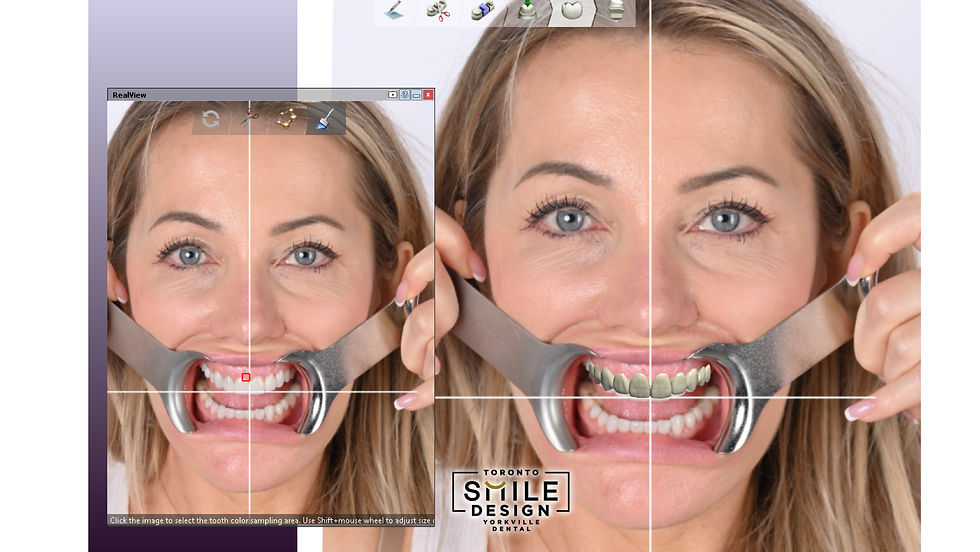
These intraoral design images show the “blueprint stage” of the case—where we digitally plan tooth contours, incisal edge position, and occlusal plane changes before performing irreversible dentistry. At Toronto Smile Design – dental clinic Yorkville (near Bloor-Yonge), we use intraoral design to connect aesthetics with function, especially in cases involving deep bite and bite collapse patterns. By designing digitally first, we can preview how adjusting tooth dimensions and rebuilding occlusal planes supports a more stable bite and more natural tooth display.

For patients searching cosmetic dentistry Toronto, smile makeover Toronto, or a cosmetic dentist Yorkville, these images help explain why planning matters: we can identify discrepancies in symmetry, evaluate how changes will affect the smile arc, and coordinate the design with functional data (including MODJAW movement analysis when indicated). The result is a more predictable plan and a clearer communication bridge between the

3D Digital Smile Design Toronto

Patients often describe the result of this kind of bite-aware smile design as a 'dental facelift.' Not because dentistry replaces cosmetic medicine, but because restoring proper proportions and support may make the face look more balanced, rested, and harmonious. When tooth position and bite height are planned correctly, the lips can sit more comfortably, the smile can look less tense, and the overall expression can feel lighter, without chasing aggressive tooth length or repeated gum procedures. The key is that this effect is created through conservative, measurable planning, not 'guesswork in the mouth.' In fact, recent studies have shown a link between bite reconstruction and improved facial aesthetics, providing empirical support to the concept of a 'dental facelift.' By aligning dental structures, we can achieve not just cosmetic improvement but also enhanced facial proportions and balance.

This is the initial frontal 2D Digital Smile Design (DSD) image—one of the first planning records we create at Toronto Smile Design – dental clinic Yorkville (near Bloor-Yonge). Using standardized frontal smile photography, we apply a 2D overlay to evaluate facial midline, smile arc, tooth proportions, incisal edge position, and gingival symmetry. For patients researching cosmetic dentistry Toronto or a smile makeover Toronto, this step helps turn “I don’t like my smile” into measurable design targets—especially when concerns include a gummy smile, uneven gum display, and long-looking incisal edges.

In complex cases where deep bite or bite collapse patterns influence tooth display and lip support, 2D planning is used alongside functional analysis to ensure the proposed aesthetics remain realistic and stable. This approved blueprint then guides mock-ups, long-term temporaries, and final restorations—so the final outcome is based on an informed plan rather than trial-and-error.

Initial 2D frontal digital smile design overlay planning tooth proportions, incisal edges, and gumline symmetry for a smile makeover

Once the digital plan is clear, we move to the step that helps patients truly feel the strategy, our diagnostic mock-up. A mock-up is a temporary, reversible preview that lets the patient see a “glimpse” of the proposed smile directly in the mouth. It’s not meant to be a final cosmetic product. It’s a planning tool—like an architectural model before building the home.

This is also the phase where patients can accidentally talk themselves out of a great plan by focusing on the wrong details. It’s very common to hear questions like: “Is this exactly how the final will look?” or “Why do they look bulky?” or “They look matte.” Those concerns are understandable, but the mock-up is intentionally imperfect in surface finish and micro-aesthetics. It is not layered ceramic, not polished like a final prosthesis, and not optimized for translucency and texture. In other words, it’s not the “beauty pass.”

Before vs after mock-up video: see the smile without the preview and then with the diagnostic mock-up in place.

What the mock-up is intended to convey is far more important: dimensions and facial impact. We use it to verify the big-picture decisions that actually lead to success in cases like hers, how tooth position supports the lips, how the new incisal edge position changes tooth display, how the smile arc reads in motion, and how the bite feels when we’re testing changes like an increased VDO. For a patient with a deep bite, canted occlusal plane, and high tooth display, this step serves as a powerful reality check: it shows what happens to the face when the system is built with better proportions.

The right mindset in the mock-up phase is: “Do I like what this does to my expression?” “Does my smile feel balanced?” “Do my lips look more supported?” The fine details, surface texture, brightness nuances, line angles, and the “high-end” ceramic character are planned deliberately later, before manufacturing the final prosthesis. That’s when we discuss the artistic choices carefully: shade mapping, translucency, texture, and how the restorations will photograph. But first, we confirm the architecture.

This centre-view portrait shows a before-and-after comparison of the patient without the mock-up and with the diagnostic mock-up in place. At Toronto Smile Design – dental clinic Yorkville (near Bloor-Yonge), mock-ups are used to preview the dimensions of a new smile before final restorations are manufactured. In cases involving gummy smile concerns, uneven gum display, and deep bite patterns, this step helps confirm how changes in tooth position and incisal edge length affect facial harmony, tooth display, and lip support.

It’s normal for a mock-up to look slightly matte or bulky compared to final ceramics—because it’s a planning tool, not the finished surface texture. What matters most in this stage is the architecture: the smile arc, symmetry, and the way the proposed design fits the patient’s face. For patients searching cosmetic dentistry Toronto, smile makeover Toronto, or veneers Yorkville, this image illustrates why planning-first dentistry creates more predictable outcomes an

Before and after centre portrait with diagnostic mock-up showing improved tooth proportions and smile design preview

This left-side portrait comparison shows the patient before the mock-up and after the diagnostic mock-up preview. Side views are essential at Toronto Smile Design – dental clinic Yorkville because they reveal details that a frontal photo can hide: lip support, facial balance, and how much tooth and gum show as the smile moves. In planning-first cases—especially when deep bite or bite collapse patterns affect tooth display—this view helps confirm whether the proposed incisal edge position and smile arc look natural from the profile.

A mock-up is not the final ceramic finish, so it may appear matte or slightly bulky; the goal at this stage is to confirm the dimensions and facial impact. For patients searching cosmetic dentistry Toronto, smile makeover Toronto, or dentist near Bloor Yonge, this left-side before-and-after preview demonstrates how digital smile design Toronto can guide a stable, individualized plan before final restorations are manufactured.

Before and after left-side portrait with diagnostic mock-up showing improved tooth display and lip support
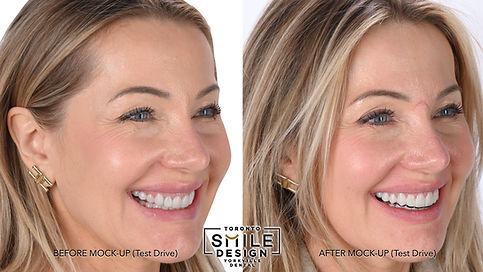
This right-side portrait comparison shows the patient before the mock-up and after the diagnostic mock-up preview. At Toronto Smile Design – dentist Yorkville Toronto (near Bloor-Yonge), side views are critical because they reveal how the smile interacts with the lips and facial profile—especially in cases where deep bite patterns influence tooth display and lower facial support.

The mock-up phase is designed to validate the dimensions of the proposed smile: incisal edge position, smile arc, and overall proportion. It may look slightly matte or bulky compared to the final restorations because it is a planning tool—not the finished ceramic texture and polish. For patients researching cosmetic dentistry Toronto, smile makeover Toronto, or veneers Yorkville, this right-side before-and-after preview illustrates how digital smile design Toronto helps patients see the “blueprint” first, then move forward with a more predictable, individualized treatment plan.

Before and after right-side portrait with diagnostic mock-up showing improved smile arc, tooth display, and lip support

This approach is part of what patients appreciate about working with a dentist near Bloor Yonge in a planning-driven practice: we don’t ask you to “trust the process” blindly, we let you preview the blueprint, understand what matters most, and make choices with confidence.

This centre-side portrait shows the patient after placement of the diagnostic mock-up preview. At Toronto Smile Design – dental clinic Yorkville (near Bloor-Yonge), this angle is valuable because it captures facial profile and smile dynamics together, allowing us to evaluate tooth display, smile arc, and lip support in a realistic way. The goal of the mock-up phase is to confirm the dimensions of the plan—incisal edge position, overall proportion, and how the proposed design fits the patient’s facial features—especially in cases where deep bite patterns have influenced tooth display and lower facial support.

Mock-ups can appear matte or slightly bulky compared to final restorations because they are a planning tool, not the finished ceramic surface. Fine details such as surface texture, translucency, and final shade characterization are refined before manufacturing the definitive restorations. For patients searching cosmetic dentistry Toronto, smile makeover Toronto, or veneers Yorkvil

After centre-side portrait with diagnostic mock-up showing planned smile proportions, tooth display, and improved lip support

Screen recording of the initial 3D digital wax-up—building tooth contours, incisal edges, and occlusal planes before treatment

These centre-view portrait photos show the patient before and with lab-fabricated long-term PMMA temporaries following crown lengthening. At Toronto Smile Design – dental clinic Yorkville (near Bloor-Yonge), long-term provisionals are used for two essential reasons in advanced cosmetic dentistry Toronto. First, they help guide soft-tissue healing: after crown lengthening with osteotomy, the gingiva heals around the contours of the temporary teeth, and well-designed PMMA temporaries can support more stable, symmetrical gingival architecture—especially important for patients who previously experienced gumline relapse.

Second, these temporaries allow the patient to “live in” the new smile before final restorations are manufactured. The centre-view portrait helps us evaluate the facial impact of the new dimensions—smile arc, tooth display, and lip support—while the patient experiences function with the planned VDO changes. For patients searching smile makeover Toronto, veneers Yorkville,

Before and after centre-view portrait with long-term PMMA temporaries guiding gingival healing after crown lengthening and previewing a smile makeover

These left-view portrait photos show the patient before and with lab-fabricated long-term PMMA temporaries after crown lengthening. At Toronto Smile Design – dental clinic Yorkville (near Bloor-Yonge), side views are essential because they reveal how the smile interacts with the lips and facial profile—details that can be missed in a frontal photo. The long-term PMMA provisionals serve two key purposes in advanced cosmetic dentistry Toronto.

First, they help guide gingival healing: after crown lengthening with osteotomy, the soft tissue heals around the cervical contours of the temporaries, supporting a more stable and symmetrical gingival line—especially important for patients with previous gumline relapse. Second, they allow the patient to “test drive” the new smile dimensions and function during the provisional phase, including changes in VDO and occlusal plane stability when indicated. For patients researching smile makeover Toronto, veneers Yorkville, or a cosmetic dentist Yorkvi

Before and after left-view portrait with long-term PMMA temporaries guiding gingival healing after crown lengthening and previewing smile makeover

These right-view portrait photos show the patient before and with lab-fabricated long-term PMMA temporaries following crown lengthening. At Toronto Smile Design – dental clinic Yorkville (near Bloor-Yonge), this angle helps evaluate profile-based changes such as tooth display, smile arc, and lip support—especially important when deep bite or bite collapse patterns have affected facial proportions.

Long-term PMMA provisionals play two major roles in advanced cosmetic dentistry Toronto. First, they support gingival healing: after crown lengthening with osteotomy, the soft tissue heals around the emergence contours of the temporaries, helping the gingival line mature in a more stable, symmetrical way—an important step for patients who previously experienced gumline relapse. Second, they allow the patient to “live in” the new smile before final restorations are manufactured, including functional testing of the planned VDO and occlusal stability. For patients searching smile makeover Toron

Before and after right-view portrait with long-term PMMA temporaries guiding gingival healing after crown lengthening and previewing smile makeover

Once she accepted the final plan, we transitioned from conceptual design to biological implementation. The surgical phase was vital to ensuring long-term stability. We performed crown lengthening to align the bone and gum optimally, a procedure designed to provide not just immediate aesthetic improvement but also sustainable healing. By addressing both the soft tissue and the supporting bone architecture, we aimed for a lasting outcome that prioritizes both function and aesthetics.

Through harmonizing the bone line with the intended gumline, we were planning for stability rather than chasing a short-term appearance. For a patient with a history of relapse, this was especially important: the goal wasn’t simply “less gum show,” but a gumline that might heal into a position that made biological sense.

Before vs after video: smile without and with long-term PMMA temporaries—previewing the new look while guiding gingival healing after crown lengthening.

After the surgical phase, we transitioned immediately into guided healing with lab-fabricated long-term PMMA provisionals. These were not quick chairside temporaries—they were designed from the approved digital plan and made to function as a long-term blueprint. We used them for two main reasons.

First, they act like a healing guide for the soft tissues. The contours of the temporary teeth, especially in the cervical (gumline) zone, help shape how the gums settle as they recover. This is one of the most underappreciated steps in aesthetic dentistry: the gum doesn’t just “heal,” it heals around something. When the provisional contours are thoughtfully designed, the tissue matures more evenly and symmetrically.

Second, they allow the patient to “live” in the new bite, specifically, the increased VDO, before any final appliances are manufactured. That trial period matters. It lets us evaluate comfort, speech, bite feel, and day-to-day function, and it gives the patient a real-world preview of the new smile proportions. If any refinements are needed, we can adjust the blueprint in PMMA rather than discovering problems after final ceramics are made. For patients exploring full-mouth reconstruction in Toronto or worn-teeth treatment in Toronto, this staged approach is often what transforms anxiety into trust: it’s controlled, reversible, and designed to protect the final result.

This centre intraoral photo was taken before placing the lab-fabricated long-term PMMA temporaries. At Toronto Smile Design – dentist Yorkville Toronto (near Bloor-Yonge), we capture baseline intraoral records to document deep bite relationships, occlusal contact patterns, and any discrepancies from older restorations before entering the provisional/healing phase. This record supports digital smile design Toronto by showing the starting point for incisal edge position and bite stability, and it helps patients understand why staged planning is essential in complex restorative dentistry Toronto. In crown lengthening cases, this baseline also helps track gingival healing and tissue stability once PMMA provisionals are placed.

Centre intraoral photo before PMMA long-term temporaries showing deep bite and old restoration discrepancies prior to crown lengthening healing phase

This centre intraoral photograph was taken after placement of lab-fabricated long-term PMMA temporaries. At Toronto Smile Design – dentist Yorkville Toronto (near Bloor-Yonge), long-term provisionals are used as a functional and aesthetic blueprint: they guide gingival healing after crown lengthening and allow the patient to experience the new smile dimensions and bite position before final restorations are manufactured. In complex cases involving deep bite or bite collapse patterns, PMMA provisionals help us test occlusal stability and confirm the planned VDO changes in real life. For patients researching cosmetic dentistry Toronto or a smile makeover Toronto, this image demonstrates why planning-first dentistry improves predictability—final restorations are based on a proven design, not guesswork.

Centre intraoral photo after PMMA long-term temporaries showing improved occlusion and planned smile dimensions after crown lengthening healing

This left intraoral image documents the bite and tooth relationships before long-term PMMA provisionals were inserted. Side views are essential at our dental clinic Yorkville because deep bite and bite collapse patterns are often not perfectly symmetrical—one side can carry heavier contacts or show more instability. These records support occlusion/bite correction dentist Toronto analysis and help guide the staged workflow: crown lengthening healing, provisional design, and eventual final restorations. For patients researching full mouth reconstruction Toronto or worn teeth treatment Toronto, this image shows the starting point we use for predictable planning and measurable improvement.

Left intraoral photo before PMMA long-term temporaries showing deep bite and uneven contacts prior to bite collapse treatment planning
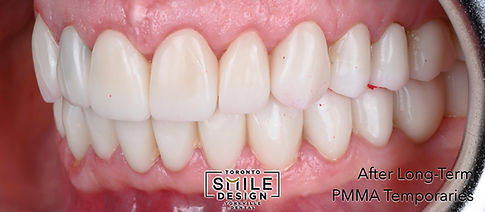
This left intraoral image shows the smile after long-term PMMA provisionals were inserted. Side views are essential because deep bite and bite collapse patterns often load unevenly, and we want to confirm improved contact balance from left to right. At our dental clinic Yorkville, these provisional-stage images help us evaluate occlusal plane stability, tooth display, and how the temporaries support tissue healing following crown lengthening with osteotomy when indicated. For patients searching full mouth reconstruction Toronto or an occlusion/bite correction dentist Toronto, this image demonstrates the provisional “test drive” phase—where we verify comfort and stability before final restorations are fabricated.

Left intraoral photo after PMMA long-term temporaries showing improved bite contacts and occlusal plane stability for bite collapse treatment

This right intraoral photo was taken before the long-term PMMA temporaries were placed. At Toronto Smile Design – dentist Yorkville Toronto (near Bloor-Yonge), we capture right-side baseline images to evaluate deep bite contact patterns, occlusal plane discrepancies, and how older restorations influence function and tooth display. These records support digital smile design Toronto by showing the pre-provisional starting point and help us communicate why temporaries are used as a blueprint: to guide gingival healing after crown lengthening and to allow the patient to experience the new look and function before final restorations are manufactured. This staged approach is a key part of complex restorative dentistry Toronto and smile makeover Toronto planning.

Right intraoral photo before PMMA long-term temporaries showing deep bite contacts and occlusal imbalance prior to digital smile design Toronto

This right intraoral photo was taken after placement of long-term PMMA temporaries. At Toronto Smile Design – dentist Yorkville Toronto (near Bloor-Yonge), these provisionals are designed from the approved digital smile design Toronto blueprint and used to guide gingival healing after crown lengthening while the patient experiences the new look and function. In deep bite cases, provisional restorations help us confirm the planned occlusion and VDO changes, refine tooth contours, and ensure the final restorations will be comfortable and stable. For patients researching cosmetic dentistry Toronto, veneers Yorkville, or a smile makeover Toronto, this stage demonstrates why we take a staged, predictable approach before manufacturing definitive restorations.

Right intraoral photo after PMMA long-term temporaries showing provisional smile design and improved occlusion after crown lengthening healing

After approximately 2–3 months in her long-term PMMA temporaries, she reached an important milestone: the smile felt right, not only in the mirror, but in daily life. She reported that chewing, speaking, and smiling felt comfortable with the new, increased VDO, and she was confident in the overall look and proportions we had established during the trial phase.

This left-view model photo shows the upper PMMA crowns and bridges from a lateral angle. Side model views are important because they reveal smile arc continuity, incisal edge design, and how the tooth contours transition from front to back—details that support both aesthetics and function. At our dental clinic Yorkville, we use this stage to verify the provisional blueprint before it is worn in the mouth during healing and functional testing. For patients exploring cosmetic dentistry Toronto, veneers Yorkville, or a smile makeover Toronto, this model photo helps explain why we design first: it improves lab-to-clinic communication, reduces guesswork, and supports predictable outcomes after crown lengthening and restorative planning.

Left view of upper PMMA crowns and bridges on model showing incisal edge design and smile arc planning for smile makeover Toronto

This right-side model photo shows the upper PMMA crowns and bridges used as long-term provisionals in a staged smile makeover workflow. At Toronto Smile Design – dentist Yorkville Toronto (near Bloor-Yonge), PMMA provisionals are designed from the digital smile design Toronto plan and used to help guide gingival healing after crown lengthening while allowing the patient to experience the new smile dimensions before final restorations are fabricated. The model view helps verify contour, symmetry, and occlusal relationships, ensuring the provisional blueprint is accurate and transferable to the final design. For patients searching cosmetic dentist Yorkville, this is part of the predictable planning process that supports stable, natural-looking results.

Right view of upper PMMA crowns and bridges on dental model showing provisional contours and tooth proportions for digital smile design

This centre-view model photo shows the upper PMMA crowns and bridges fabricated as long-term provisionals. At Toronto Smile Design – dental clinic Yorkville (near Bloor-Yonge), PMMA provisionals are not “temporary plastic teeth”—they are a functional and aesthetic blueprint designed from the approved digital smile design Toronto plan. On the model, we can verify tooth proportions, incisal edge position, and overall symmetry before delivery. In cases involving gummy smile correction and crown lengthening, these PMMA designs also help guide soft-tissue healing by supporting stable gingival contours once placed. For patients researching cosmetic dentistry Toronto or a smile makeover Toronto, this model stage shows the planning-first approach that improves predictability before final restorations are manufactured.

Centre view of upper PMMA crowns and bridges on dental model designed from digital smile design Toronto

This centre-view model photo shows the lower PMMA crowns and bridges fabricated as long-term provisionals in a staged restorative workflow. At Toronto Smile Design – dental clinic Yorkville (near Bloor-Yonge), lower-arch PMMA provisionals are critical when a case involves deep bite or bite collapse patterns, because the lower teeth strongly influence occlusal stability, guidance, and comfort. On the model, we verify tooth morphology, occlusal plane design, and contact relationships before delivery. For patients exploring full mouth reconstruction Toronto or worn teeth treatment Toronto, this stage helps explain how we rebuild function first—testing bite and VDO changes in a controlled provisional phase—before final restorations are manufactured.

Centre view of lower PMMA crowns and bridges on dental model designed for occlusion correction and full mouth reconstruction Toronto

This left-side model photo shows the lower PMMA crowns and bridges from a lateral angle, helping us evaluate the occlusal plane and how the lower teeth support functional guidance. Side views are essential because bite collapse and deep bite patterns are often linked to uneven contacts and canted planes, and the lower arch plays a major role in stabilizing the bite. At our dentist Yorkville Toronto practice, this model stage supports clear lab-to-clinic communication and reduces guesswork before the patient wears the long-term PMMA provisionals. For patients searching occlusion/bite correction dentist Toronto, this is part of a planning-first approach designed for stability and comfort.

Left view of lower PMMA crowns and bridges on model showing occlusal plane design for bite collapse treatment and full mouth reconstruction Toronto

This right-side model photo shows the lower PMMA crowns and bridges used as long-term provisionals in a staged case plan. At Toronto Smile Design – dental clinic Yorkville (near Bloor-Yonge), we use PMMA provisionals to test function, refine occlusion, and validate VDO changes before final restorations are fabricated. The model view allows us to confirm lower tooth contours, occlusal contacts, and guidance—elements that are especially important when correcting deep bite patterns. For patients researching cosmetic dentistry Toronto and full mouth reconstruction Toronto, this stage demonstrates why we design first: it creates a predictable blueprint that translates into stable, natural-looking results.

Right side view of lower final restorations on dental model showing lifelike porcelain restorations

Right view of lower PMMA crowns and bridges on dental model showing provisional occlusion design for digital smile design Toronto and bite correction

Screen recording of final restoration design using long-term PMMA temporaries as the blueprint—refining minor discrepancies and elevating aesthetics before final manufacturing.

At that point, we went back into “design mode” one last time. We retook the full set of Smile Design photographs and re-evaluated the smile in motion—rest position, natural smile, full smile, and facial dynamics from multiple angles. This matters because a smile isn’t a static picture; it’s something you live in. With the updated records, we refined the PMMA temporaries to finalize the exact contours, incisal edge positions, and overall harmony. Those refinements became the blueprint for her definitive restorations—so the final result wasn’t a guess, but a carefully upgraded version of what she had already tested and approved.

When the final restorations were delivered, the difference was immediately clear in both appearance and facial balance. With the increased VDO, her lower facial height looked more supported, her lips sat more naturally, and the bite relationship was no longer locked into a deep-bite pattern. The smile appeared calmer, more proportionate, and more symmetrical because it was built on a stable occlusal foundation rather than relying on purely cosmetic changes.

This left-side model photo shows the final zirconia restorations from a lateral angle, helping us evaluate the smile arc, incisal edge design, and contour transitions from front to back. Side views on the model are important because they reveal profile-related details that influence tooth display and overall harmony—especially when a case includes deep bite correction and occlusion refinement. At Toronto Smile Design – dentist Yorkville Toronto (near Bloor-Yonge), these restorations are fabricated from an approved design that was refined after the long-term PMMA provisional phase. For patients exploring cosmetic dentistry Toronto, veneers Yorkville, or full mouth reconstruction Toronto, this stage demonstrates how we finalize predictable aesthetics and function before insertion.

Left view of final zirconia restorations on model showing smile arc and incisal edge design for veneers Yorkville and smile makeover Toronto planning at our dentist Yorkville Toronto.

This right-side model photo shows the final zirconia restorations before delivery, confirming contour refinement and occlusal design based on the patient’s long-term PMMA temporaries. At Toronto Smile Design – dental clinic Yorkville (near Bloor-Yonge), we use this model verification stage to ensure the final restorations match the approved blueprint: tooth proportions, incisal edge position, symmetry, and a stable bite relationship. For patients searching cosmetic dentist Yorkville or a downtown Toronto dentist, this step demonstrates how planning-first dentistry reduces surprises—final restorations are built from a tested prototype and upgraded through precise digital refinements. This is especially valuable in deep bite and bite collapse treatment cases where function and aesthetics must be aligned.

Right view of final zirconia restorations on dental model showing occlusion and contour refinement after PMMA temporaries in a cosmetic dentistry Toronto

This centre-view model photo shows the final zirconia restorations before delivery. At Toronto Smile Design – dental clinic Yorkville (near Bloor-Yonge), we review the final restorations on the model to confirm the blueprint we designed and validated through long-term PMMA temporaries. This step allows us to verify tooth proportions, incisal edge position, smile arc harmony, and overall symmetry—while also checking occlusal relationships prior to insertion. For patients searching cosmetic dentistry Toronto or a smile makeover Toronto, this model stage highlights our planning-first approach: final restorations are not a “guess,” but an upgraded version of the design the patient already tested and approved. It also supports predictable outcomes in cases involving deep bite correction and VDO changes, where occlusion matters as much as aesthetics.

Centre view of final zirconia restorations on dental model fabricated from digital smile design Toronto plan for smile makeover Toronto

This left-side model photo shows the final zirconia restorations from a lateral angle, helping us evaluate the smile arc, incisal edge design, and contour transitions from front to back. Side views on the model are important because they reveal profile-related details that influence tooth display and overall harmony—especially when a case includes deep bite correction and occlusion refinement. At Toronto Smile Design – dentist Yorkville Toronto (near Bloor-Yonge), these restorations are fabricated from an approved design that was refined after the long-term PMMA provisional phase. For patients exploring cosmetic dentistry Toronto, veneers Yorkville, or full mouth reconstruction Toronto, this stage demonstrates how we finalize predictable aesthetics and function before insertion.

Left model view of zirconia finals—used to confirm contours, transitions, and smile arc before delivery.

This right-side model photo shows the final zirconia restorations before delivery, confirming contour refinement and occlusal design based on the patient’s long-term PMMA temporaries. At Toronto Smile Design – dental clinic Yorkville (near Bloor-Yonge), we use this model verification stage to ensure the final restorations match the approved blueprint: tooth proportions, incisal edge position, symmetry, and a stable bite relationship. For patients searching cosmetic dentist Yorkville or a downtown Toronto dentist, this step demonstrates how planning-first dentistry reduces surprises—final restorations are built from a tested prototype and upgraded through precise digital refinements. This is especially valuable in deep bite and bite collapse treatment cases where function and aesthetics must be aligned.

Right view of final zirconia restorations on dental model showing occlusion and contour refinement after PMMA temporaries

This centre-view model photo shows the final zirconia restorations before delivery. At Toronto Smile Design – dental clinic Yorkville (near Bloor-Yonge), we review the final restorations on the model to confirm the blueprint we designed and validated through long-term PMMA temporaries. This step allows us to verify tooth proportions, incisal edge position, smile arc harmony, and overall symmetry—while also checking occlusal relationships prior to insertion. For patients searching cosmetic dentistry Toronto or a smile makeover Toronto, this model stage highlights our planning-first approach: final restorations are not a “guess,” but an upgraded version of the design the patient already tested and approved. It also supports predictable outcomes in cases involving deep bite correction and VDO changes, where occlusion matters as much as aesthetics.

Centre view of final zirconia restorations on dental model fabricated from digital smile design Toronto plan for smile makeover Toronto

Most importantly, she felt the outcome finally matched what she had been trying to achieve through multiple prior treatments: a smile that looks intentional, feels functional, and remains consistent. She told us she was genuinely happy with the result, and when we asked whether we could share her story and photos on our website for educational purposes, she kindly agreed.

What made this case meaningful wasn’t just the final smile; it was the process that got her there. After years of trying to solve a complex problem through isolated procedures, she finally experienced what comprehensive planning feels like: decisions made on a digital patient, tested through long-term provisionals, and only then translated into definitive restorations. That sequence matters because when gumline aesthetics, incisal edge position, and bite stability are connected, you don’t have to “keep fixing” the smile; you can finish it.

This before-treatment portrait is annotated with golden proportion and facial proportion guidelines as part of our Smile Design analysis at Toronto Smile Design – dentist Yorkville Toronto (near Bloor-Yonge). The overlay helps visualize how tooth display, lip support, and lower facial height relate to overall facial balance. In patients with deep bite and bite collapse patterns, the jaws can close “too far,” reducing the vertical dimension and making the lips appear less supported at rest and in smile.

For patients researching cosmetic dentistry Toronto, smile makeover Toronto, or full mouth reconstruction Toronto, this image demonstrates why we plan beyond the teeth. Golden proportion tools are not used to force a “cookie-cutter” smile; they are a reference to help us communicate dimensions and set realistic design targets. Combined with digital smile design Toronto and functional bite evaluation, these records help guide an individualized plan to rebuild occlusal planes, increase VD

Before-treatment portrait with golden proportion smile analysis showing reduced lip support and decreased lower facial height from bite collapse

This after-treatment portrait highlights what we call a Dental Facelift—a facial support improvement that can occur when a collapsed bite is rebuilt with careful occlusion planning and an increased vertical dimension of occlusion (VDO). At Toronto Smile Design – dentist Yorkville Toronto (near Bloor-Yonge), we use digital smile design Toronto and functional bite analysis to design tooth position and occlusal planes in a way that supports both aesthetics and comfort.

In patients with deep bite and bite collapse patterns, the lower third of the face can appear compressed, and the lips may look less supported at rest and in smile. By restoring a more stable bite relationship and appropriate VDO, the facial proportions can appear more balanced, with improved lip support and a more natural lower facial height. Patients often describe this as fuller-looking lips and a “longer,” less compressed facial appearance—without chasing excessive tooth length.

For those researching smile makeover To

After treatment portrait showing improved lower facial height and lip support (“Dental Facelift”) after VDO increase and bite correction in a smile makeover

Before
After
  • Her outcome reflects the power of treating the smile as a system. By correcting the deep-bite relationship and increasing VDO in a controlled manner, we improved facial support and comfort while achieving the balanced tooth-to-gum proportions she had been seeking for years. The final restorations weren’t a surprise; they were an upgraded version of a design she had already lived with and approved, one that respected her facial dynamics, her functional movements, and her desire for predictability.

  • Just as importantly, this case strengthens a principle we share with every patient who visits our dental clinic in Yorkville: cosmetic dentistry isn’t only about “whiter” or “straighter.” In the right hands, it’s about stable design, where the gumline, bite, and facial support are planned together so the smile looks natural in motion and feels comfortable in real life. As a cosmetic dentist in Yorkville, we aim to keep the approach calm, evidence-informed, and individualized, never rushed, never one-size-fits-all.

This centre-view before-and-after portrait highlights the full transformation after a planning-first smile makeover at our dental clinic Yorkville (near Bloor-Yonge). The before image documents the patient’s high tooth/gum display, uneven gumline concerns, and reduced lip support related to a deep, collapsed bite pattern. The after image shows the final outcome after comprehensive digital planning and staged treatment: improved smile proportions, more balanced tooth display, and enhanced facial support associated with an increased VDO and stabilized occlusion. Patients often describe this facial support improvement as a “Dental Facelift,” because restoring bite height can help the lower face appear less compressed and the lips appear more supported. For those searching cosmetic dentistry Toronto or a cosmetic dentist Yorkville, this comparison demonstrates why we design first, test with long-term temporaries, and only then deliver final restorations.

Side-by-side before-and-after portrait of patient showing smile transformation with porcelain veneers

Before and after centre portrait showing smile makeover Toronto result with improved gumline symmetry, lip support, and corrected deep bite after digital smile design Toronto

This left-side before-and-after portrait emphasizes the facial and profile impact of the completed treatment. Side views are essential at our dentist Yorkville Toronto practice because they reveal how tooth position and bite height affect lip support and lower facial proportions. In the before image, the deep bite/bite collapse pattern contributed to a compressed lower facial height and reduced lip support. In the after image, the corrected occlusion and increased VDO support a more balanced lower face and a calmer, more natural smile profile. For patients researching full mouth reconstruction Toronto or occlusion/bite correction dentist Toronto, this comparison shows why function-driven planning matters: aesthetics are designed to work with the patient’s bite, not against it. Results vary by individual, and every plan is tailored to facial dynamics and comfort.

Side-by-side before-and-after portrait of patient showing smile transformation with porcelain veneers

Before and after left portrait showing improved lip support and lower facial height after raise vertical dimension dentist planning and occlusion correction

This right-side before-and-after portrait captures the completed result from another essential angle. At Toronto Smile Design – dental clinic Yorkville (near Bloor-Yonge), side comparisons help confirm the stability of tooth display, smile arc, and lip support—especially in patients who previously had repeated cosmetic treatments that didn’t hold. The before image reflects the effect of a deep, collapsed bite pattern on facial support and smile dynamics. The after image shows a more balanced result following digital smile design Toronto, functional bite planning, and a staged workflow that included long-term PMMA temporaries before final restorations. For those searching cosmetic dentistry Toronto, smile makeover Toronto, or cosmetic dentist Yorkville, this view reinforces the benefit of building aesthetics on a stable occlusion and individualized facial planning.

Left side before-and-after portrait of patient showing smile makeover with porcelain veneers

Before and after right portrait showing smile makeover Toronto outcome with improved facial harmony, lip support, and stable bite after digital smile design Toronto

Sound-on patient interview + before/after portrait video from a smile makeover Toronto case at our dental clinic Yorkville—sharing her experience with digital planning, long-term temporaries, and final restorations.

SOUND ON!

Before
This upper centre intraoral photograph was taken before treatment to document the patient’s starting condition, including existing restorations, tooth proportions, and how the upper teeth present relative to the deep bite relationship. At our dental clinic Yorkville (near Bloor-Yonge), upper-arch baseline records are essential in digital smile design Toronto because they allow us to plan incisal edge position, smile arc, and symmetry with precision—especially when gumline aesthetics and bite collapse patterns are involved. These images also help communicate the plan to the lab and provide a clear reference point for measuring improvement throughout a staged smile makeover Toronto process.

Upper and lower centre intraoral photo before treatment showing old restorations, tooth display concerns, and deep bite relationship baseline

This upper right intraoral image documents pre-treatment tooth contours and any restoration discrepancies from the right side. Side views often reveal asymmetries in shape, embrasures, and tooth positioning that may not be obvious in a straight-on photo. At our dentist Yorkville Toronto practice, these records support complex restorative dentistry Toronto and help guide the digital plan before mock-ups, long-term temporaries, and final restorations. For patients searching cosmetic dentistry Toronto or a cosmetic dentist Yorkville, this is part of the diagnostic baseline that makes planning more predictable and individualized.

Upper and lower right intraoral photo before treatment showing arch form, restoration discrepancies, and bite contact baseline

This upper left intraoral photograph records the pre-treatment condition from the left side, helping us evaluate tooth form, contour transitions, and symmetry across the arch. At our dental clinic Yorkville, left-right comparisons are essential for planning a refined smile—especially when a case includes uneven tooth display, incisal edge discrepancies, or a history of multiple prior dental treatments. These images are integrated into our digital smile design Toronto workflow to create measurable design targets and to communicate clearly with the dental lab before final restorations are fabricated.

Upper and lower left intraoral photo before treatment showing tooth contour and alignment baseline for digital smile design

After
This final centre intraoral photograph was taken in an open position to clearly display the completed restorations, tooth contours, and incisal edge design without occlusal contact covering key details. At Toronto Smile Design – dental clinic Yorkville (near Bloor-Yonge), open-position images are essential for documenting shape, texture, and symmetry after a staged smile makeover Toronto. This view helps communicate the final smile architecture that was planned through digital smile design Toronto and refined through the long-term PMMA provisional phase before the definitive restorations were fabricated. For patients researching cosmetic dentistry Toronto or a cosmetic dentist Yorkville, this image illustrates the value of planning-first dentistry—final results are built from an approved blueprint, with careful attention to proportion, facial harmony, and functional design.

Final centre intraoral photo in open position showing completed restorations and refined tooth proportions after smile makeover Toronto
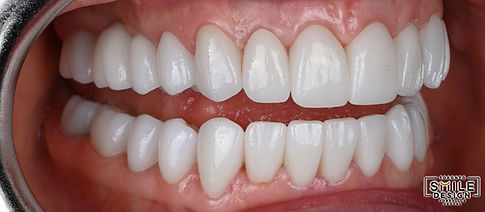
This final right-side intraoral photograph was captured in an open position to clearly document the completed restorations, including contour refinement, incisal edge details, and symmetry across the arch from the right perspective. At Toronto Smile Design – dental clinic Yorkville (near Bloor-Yonge), open-position images are part of comprehensive post-treatment documentation for cosmetic dentistry Toronto and smile makeover Toronto cases. This view supports transparency and patient education by showing the outcome that was designed digitally, tested in long-term provisionals, and finalized in definitive restorations. For patients researching a cosmetic dentist Yorkville or a downtown Toronto dentist, this is an example of a planning-first workflow focused on predictable, natural-looking results.

Final right intraoral photo in open position showing completed restorations and refined tooth contours after digital smile design Toronto

This final left-side intraoral photograph was taken with the mouth open to highlight contour transitions, embrasures, and smile arc continuity from a lateral angle. Side open-position images are valuable because they show how the design flows from anterior to posterior—details that support a natural look and clean architecture. At Toronto Smile Design – dentist Yorkville Toronto (near Bloor-Yonge), these records document outcomes following digital smile design Toronto planning and staged treatment, including long-term PMMA temporaries before the final restorations were delivered. For patients searching smile makeover Toronto or veneers Yorkville, this image demonstrates the final refinement phase—where aesthetics are aligned with stability and individualized facial dynamics.This final left-side intraoral photograph was taken with the mouth open to highlight contour transitions, embrasures, and smile arc continuity from a lateral angle. Side open-position images are valuable because the

Final left intraoral photo in open position showing restoration contours and smile arc transitions after cosmetic dentistry Toronto treatment

She was genuinely happy with the result and kindly gave us permission to share her face and photos for educational purposes, so other patients searching for a dentist near Bloor Yonge can see what a planning-first approach can achieve when previous treatments haven’t worked.

If you've had repeated dental work, gumline relapse, or you feel your bite is part of the problem, not just the teeth, our team would be happy to guide you through a thorough smile analysis and discuss options that fit your goals and comfort level. At your first consultation, you can expect a welcoming environment where we take the time to understand your unique concerns and dental history. Our initial steps include a detailed evaluation, digital imaging, and a discussion of your expectations and available treatment options. This approach helps to reduce anxiety and encourage clarity about the path forward. Each smile is unique, and the best outcomes start with a clear plan.

Before
centre intraoral photograph was taken before treatment to document the patient’s starting condition, including existing restorations, tooth proportions, and how the upper teeth present relative to the deep bite relationship. At our dental clinic Yorkville (near Bloor-Yonge), upper-arch baseline records are essential in digital smile design Toronto because they allow us to plan incisal edge position, smile arc, and symmetry with precision—especially when gumline aesthetics and bite collapse patterns are involved. These images also help communicate the plan to the lab and provide a clear reference point for measuring improvement throughout a staged smile makeover Toronto process.

centre intraoral photo before treatment showing old restorations, tooth display concerns, and deep bite relationship baseline

This upper left intraoral photograph records the pre-treatment condition from the left side, helping us evaluate tooth form, contour transitions, and symmetry across the arch. At our dental clinic Yorkville, left-right comparisons are essential for planning a refined smile—especially when a case includes uneven tooth display, incisal edge discrepancies, or a history of multiple prior dental treatments. These images are integrated into our digital smile design Toronto workflow to create measurable design targets and to communicate clearly with the dental lab before final restorations are fabricated.

left intraoral photo before treatment showing tooth contour and alignment baseline for digital smile design Toronto planning

This upper right intraoral image documents pre-treatment tooth contours and any restoration discrepancies from the right side. Side views often reveal asymmetries in shape, embrasures, and tooth positioning that may not be obvious in a straight-on photo. At our dentist Yorkville Toronto practice, these records support complex restorative dentistry Toronto and help guide the digital plan before mock-ups, long-term temporaries, and final restorations. For patients searching cosmetic dentistry Toronto or a cosmetic dentist Yorkville, this is part of the diagnostic baseline that makes planning more predictable and individualized.

Right side intraoral photo of upper and lower teeth in biting position showing steep deep bite and worn-out teeth

After
This final centre intraoral photograph was taken in biting position (occlusion) to document the patient’s completed bite relationship after treatment. At Toronto Smile Design – dental clinic Yorkville (near Bloor-Yonge), biting-position images are essential because they show how the upper and lower teeth contact in function—especially important in cases that began with a deep, collapsed bite. This view helps confirm improved occlusal stability, balanced contact patterns, and the elimination of the deep-bite lock that previously affected tooth display and facial support. The final result was planned through digital smile design Toronto, validated with long-term PMMA temporaries, and then transferred into definitive restorations. For patients searching smile makeover Toronto or an occlusion/bite correction dentist Toronto, this image illustrates that aesthetics and function were designed together for a stable, individualized outcome.

Final centre intraoral photo in biting position showing stable occlusion after deep bite correction and smile makeover

This final left-side intraoral photo was captured in biting position to evaluate occlusal stability and contact balance from a lateral perspective. Side biting views are critical because deep bite and bite collapse patterns are often asymmetrical, and we want to confirm that the bite is stable on both sides—not only in a frontal photo. At our dentist Yorkville Toronto practice, this record supports occlusion/bite correction dentist Toronto verification and documents how the restorations function under load. For patients exploring full mouth reconstruction Toronto or complex restorative dentistry Toronto, this image demonstrates the value of staged planning: the bite was designed digitally, tested with long-term PMMA temporaries, refined, and then transferred into the final restorations for predictable function and comfort.

Final left intraoral photo in biting position showing balanced contacts and occlusal plane stability after bite collapse treatment

This final right-side intraoral photograph was taken in biting position to document the completed occlusion and functional contacts from the right perspective. At Toronto Smile Design – dental clinic Yorkville (near Bloor-Yonge), we capture right-side biting views to confirm stable contact patterns, occlusal plane harmony, and improved guidance after deep bite correction. This is especially important in cases where jaw movement records (such as MODJAW analysis) showed closure deviations or uneven loading before treatment. For patients searching cosmetic dentistry Toronto, smile makeover Toronto, or an occlusion/bite correction dentist Toronto, this image demonstrates that the final result is not only cosmetic—it is built on a stable bite relationship designed and refined through a planning-first workflow.

Final right intraoral photo in biting position showing corrected deep bite and stable occlusion after digital smile design
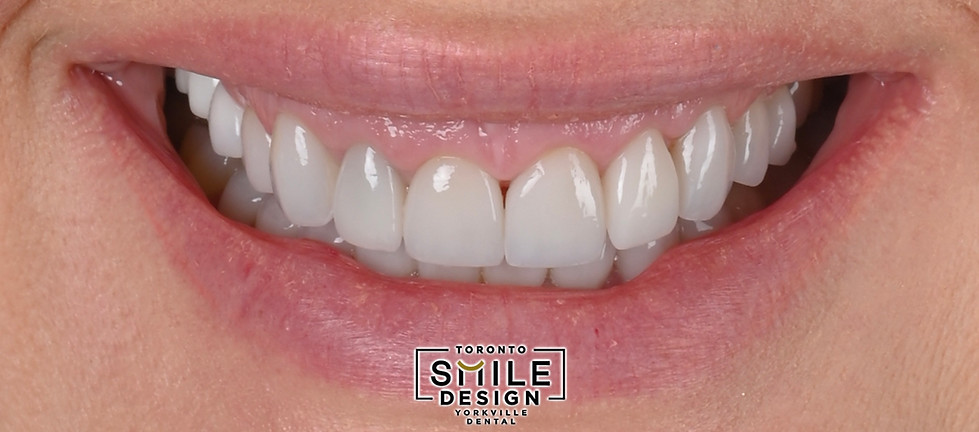
This close-up smile photograph was taken before treatment to document the patient’s starting aesthetics—gum display, gingival line symmetry, and incisal edge proportions. At Toronto Smile Design – dental clinic Yorkville (near Bloor-Yonge), close-up smile photos are a core part of our digital smile design Toronto intake because they capture details that drive predictable planning in gummy smile cases. This baseline helps us evaluate how much gum is visible on each side, how the gumline aligns with the lip line, and whether the incisal edges appear long relative to facial dynamics—especially important when a deep bite pattern can exaggerate tooth display. For patients researching cosmetic dentistry Toronto or a smile makeover Toronto, this image shows the “starting point” we use to design an individualized plan before any irreversible procedures begin.

Close-up smile photo before treatment showing gummy smile and uneven gumline in a smile makeover Toronto

This close-up smile photograph was taken after treatment to document the final aesthetics—gingival line symmetry, tooth proportions, and incisal edge refinement. At Toronto Smile Design – dental clinic Yorkville (near Bloor-Yonge), close-up finals are essential because they show the details that matter most in a high-trust cosmetic dentistry Toronto result: balanced gum display, clean transitions, and a smile that looks natural in motion. In this case, the final outcome was designed through digital smile design Toronto, validated with long-term PMMA temporaries, and then transferred into definitive restorations—helping ensure the final smile matched an approved blueprint rather than a “one-day guess.” For patients searching smile makeover Toronto or a cosmetic dentist Yorkville, this close-up image highlights the refined finish and harmony achieved through a staged, stability-focused approach.

Close-up smile photo after treatment showing balanced gumline and refined tooth proportions after smile makeover

Before
This upper centre intraoral photograph was taken before treatment to document the patient’s starting tooth proportions, existing restorations, and overall arch presentation. At Toronto Smile Design – dental clinic Yorkville (near Bloor-Yonge), these baseline records are essential for digital smile design Toronto because they let us plan incisal edge position, symmetry, and contour changes with clarity before any irreversible dentistry begins. In cases where gummy smile concerns and deep bite patterns influence tooth display, the upper-arch baseline helps connect aesthetics to function—so the final design isn’t based on guesswork. For patients researching cosmetic dentistry Toronto or a smile makeover Toronto, this image represents the “starting point” we use to design, test, and refine a predictable smile plan.

Upper centre intraoral photo before treatment showing baseline tooth proportions and existing restorations for digital smile design Toronto

This upper left intraoral photo documents the pre-treatment condition from the left side, highlighting contour transitions, tooth alignment, and symmetry across the arch. Side views are valuable because they often reveal proportion differences and restoration discrepancies that are less obvious in a straight-on image. At our dental clinic Yorkville, these records support digital smile design Toronto planning and help guide a staged smile makeover Toronto approach—especially when tooth display and gingival aesthetics are part of the concern. For patients searching cosmetic dentist Yorkville or a downtown Toronto dentist, this is part of the diagnostic baseline that improves predictability and lab communication.

Upper left intraoral photo before treatment showing baseline contour and symmetry for smile makeover Toronto planning
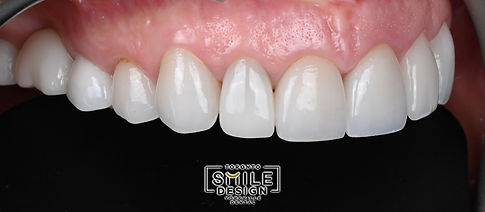
This upper right intraoral photograph captures the pre-treatment starting point from the right side, showing tooth contours, arch form, and any discrepancies in older restorations. At Toronto Smile Design – dentist Yorkville Toronto (near Bloor-Yonge), right-side baseline views help us compare symmetry across the smile, refine incisal edge targets, and plan restorative contours that look natural and function comfortably. For patients researching cosmetic dentistry Toronto, veneers Yorkville, or a smile makeover Toronto, these records demonstrate our planning-first process: we document, design, test through provisionals when needed, and then fabricate final restorations from a proven blueprint.

Upper right intraoral photo before treatment showing baseline tooth contours and restoration discrepancies for cosmetic dentistry Toronto

After
This upper centre intraoral photograph was taken after treatment to document the final restorations, tooth proportions, and overall symmetry of the upper arch. At Toronto Smile Design – dental clinic Yorkville (near Bloor-Yonge), final upper-arch images are a key part of cosmetic dentistry Toronto documentation because they show the design details that drive a natural result—incisal edge position, smile arc continuity, and refined contours. In this case, the outcome was planned through digital smile design Toronto, validated during the long-term provisional phase, and then transferred into definitive restorations to improve predictability. For patients searching smile makeover Toronto or veneers Yorkville, this image highlights the finished upper-arch aesthetics achieved through a staged, planning-first workflow.

Upper centre intraoral photo after treatment showing final restorations and refined tooth proportions after smile makeover Toronto

This upper left intraoral image shows the completed restorations from the left side after treatment. Side views are essential because they reveal contour transitions, embrasures, and how the design flows from anterior to posterior—details that influence a natural look. At our dental clinic Yorkville, we capture these final images to document the outcome of cosmetic dentistry Toronto performed with planning-first principles: the design is created digitally, tested in provisionals when indicated, refined, and then manufactured as definitive restorations. For patients researching smile makeover Toronto or a cosmetic dentist Yorkville, this image demonstrates the finished upper-arch architecture and the precision that goes into achieving balanced proportions.

Upper left intraoral photo after treatment showing final contour transitions and smile arc harmony after cosmetic dentistry Toronto

This upper right intraoral photograph documents the final upper-arch restorations from the right side after treatment. At Toronto Smile Design – dentist Yorkville Toronto (near Bloor-Yonge), we use right-side final images to confirm symmetry, contour refinement, and incisal edge harmony from multiple angles—especially important in cases where tooth display and gumline aesthetics were key concerns. The final restorations were designed through digital smile design Toronto, validated through a staged process, and fabricated to match an approved blueprint rather than an in-the-moment estimate. For patients searching cosmetic dentistry Toronto, veneers Yorkville, or a smile makeover Toronto, this image shows the finished result with a clean, natural-looking upper-arch design.

Upper right intraoral photo after treatment showing final restorations and refined incisal edge design after digital smile design Toronto

“Details make perfection, and perfection is not a detail.”

— Michelangelo

Dr.Johnson Ozgur - Cosmetic Dentist - Oral  Surgeon - Toronto Smile Design

Smile Makeover Toronto: From Gumline Relapse to a Stable, Face-Supporting Smile

At Toronto Smile Design – Yorkville Dental, we approach cosmetic cases the way we approach complex restorative dentistry: with function, facial dynamics, and long-term stability guiding every decision. Dr. Johnson Ozgur and our team believe the most predictable outcomes come from designing the end result first—then executing step-by-step—so patients aren’t trapped in a cycle of repeated “fixes” that never truly settle.

A young female patient came to our Toronto clinic after undergoing multiple treatments at different offices, including prior full-mouth rehabilitation and several crown lengthening procedures. Her main concern was a gummy smile and an uneven gumline that never stayed consistent. Each time, the soft tissue seemed to rebound, and the gingival symmetry drifted again. On top of that, she presented with a deep, collapsed bite that influenced tooth display and lip support—making her smile feel more intense than she wanted and affecting overall facial balance.

We started by building a digital patient and capturing objective functional data using MODJAW jaw-tracking. This allowed us to see not only where her bite contacts occurred, but how her jaw moved into closure. The recordings revealed a rightward deviation during closure, a canted lower occlusal plane, and a deep-bite pattern that was contributing to imbalance—both cosmetically and functionally. With this information, we planned to reposition the occlusal planes and increase the vertical dimension of occlusion (VDO). The goal wasn’t simply “less gum show.” It was a stable, comfortable bite and improved facial support—what many patients describe as a subtle, natural-looking Dental Facelift effect.

Once the design was approved, we proceeded with crown lengthening with osteotomy, carefully adjusting both the bone level and the gumline to support long-term stability. This is a critical point: focusing only on soft tissue without properly managing the underlying bone can increase the risk of unpredictable tissue changes. After surgery, we delivered lab-fabricated long-term PMMA temporaries for two reasons—first, to help guide soft-tissue healing and encourage the gumline to mature around a controlled blueprint; and second, to allow the patient to “test drive” the new smile and function at the planned VDO.

After approximately 2–3 months, the patient confirmed she was happy with both appearance and comfort. We re-took Smile Design records, refined the provisional blueprint, and fabricated the final restorations according to the upgraded design—also addressing a darker upper lateral incisor that could easily have been noticeable when she smiled.

The final result was a more balanced gumline, refined tooth proportions, improved lip support, and a stable bite—without the deep-bite pattern that had been driving the problem in the first place. The patient was genuinely pleased with the outcome and kindly permitted us to share full-face images to help other patients understand what a planning-first approach can achieve.

If you’ve had cosmetic dentistry that didn’t “hold,” or you suspect your gumline and bite are connected, our Yorkville team can help you understand the why and map out a plan designed for stability—not shortcuts.

Contact

Toronto Smile Design - Yorkville Dental

188 Cumberland St - Mezzanine Floor

M5R 0B6 - Toronto - ON

googlemaps copy.png

Our Business Hours: 

Monday:       9:00 AM – 5:00 PM
Tuesday:       9:00 AM – 5:00 PM
Wednesday: 9:00 AM – 5:00 PM
Thursday:     9:00 AM – 5:00 PM
Friday:          9:00 AM – 5:00 PM

Saturday:      9:00 AM – 4:00 PM

  • Black Instagram Icon
  • Black YouTube Icon
  • Black Facebook Icon
  • TikTok
bottom of page